
Hotel License vs. Private Lodging: Key Differences
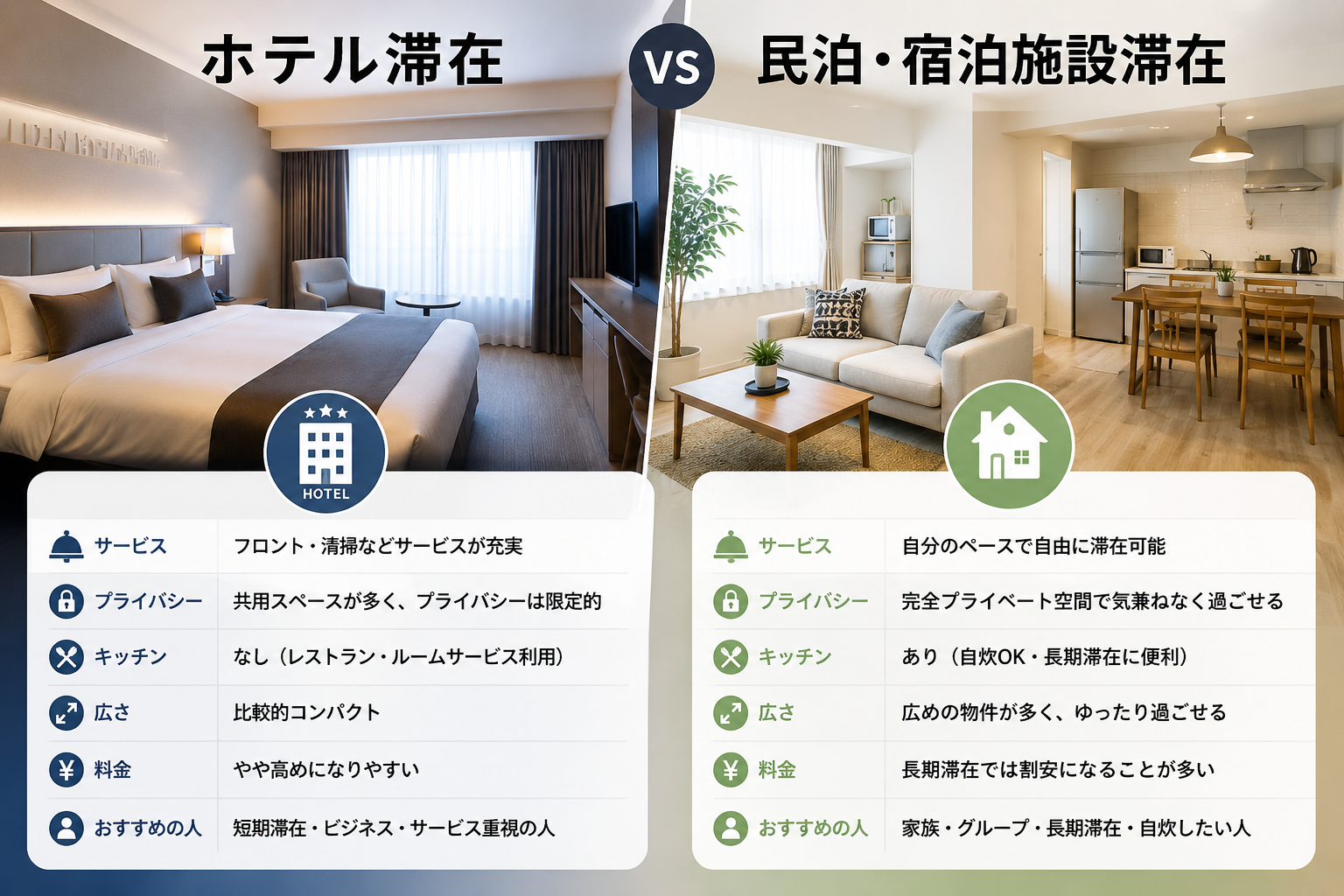
When entering the accommodation business in Japan, one of the first decisions you will face is which operating framework to use. The two main options are the hotel/ryokan license (eiyo) under the Hotel Business Act and private lodging (minpaku) under the Private Lodging Business Act. Each has distinct advantages, limitations, and requirements that significantly impact your business model.
Hotel/Ryokan License (Eiyo)
The hotel or ryokan license allows year-round operation without any cap on operating days. It permits full-scale accommodation services, including meal provision and front desk operations. The application process is more rigorous — requiring fire safety inspections, building code compliance, and facility standards — and the initial setup cost is higher. However, once licensed, you have full operational flexibility and can maximize revenue throughout the year. This model is best suited for investors who plan to operate accommodation as a primary business.
Private Lodging (Minpaku)
Private lodging offers a lower barrier to entry. Registration under the Private Lodging Business Act is simpler and less costly than hotel licensing. The key limitation is the 180-day annual operating cap, though some wards offer area cards (chiku card) that allow more days in designated zones. Private lodging is well-suited for property owners who want to generate income from spare rooms or second homes, and for investors testing the market before committing to a full hotel operation.
Cost and Regulatory Comparison
Hotel license applications involve professional fees for architects, fire safety consultants, and legal compliance — costs that can range from several hundred thousand to over a million yen depending on the property. Private lodging registration, by contrast, involves minimal fees but requires compliance with local ward ordinances, neighbor notifications, and management company designation in some areas. The appropriate choice depends on your property, business plan, and long-term goals.
Making the Right Choice
We recommend analyzing your target occupancy rate, expected ADR, and operating cost structure before deciding. Many successful operators start with private lodging and transition to a hotel license as the business proves viable. Kaisei can help you evaluate both options, navigate the application process, and develop a licensing strategy aligned with your investment goals.
Comparison Table
| Item | Private Lodging | Hotel/Ryokan License |
|---|---|---|
| Procedure | Registration | License |
| Operating Days | Up to 180 days/year | Unlimited |
| Profitability | Limited | High |
| Scale | Small-scale / side business | Full-scale operation |
| Future Outlook | Side business oriented | Primary business oriented |
Kaisei's Perspective
In the current Tokyo market, operating under a hotel/ryokan license is increasingly advantageous compared to private lodging, particularly in Ueno, Asakusa, and Katsushika areas. We recommend evaluating the hotel license route from the start if you are targeting these high-demand areas.
Summary
- For side income: choose private lodging
- For a primary business: choose the hotel/ryokan license
- For long-term hotel operations: the hotel license is recommended
For accommodation launch, operations, or investment — consult Kaisei
Consultations are free. Feel free to reach out.
Free Consultation