
June 2026
Zero Debt Start: Hotel Chefs Conquer Japan with Sun Tzu’s Light-Asset Strategy [2026]
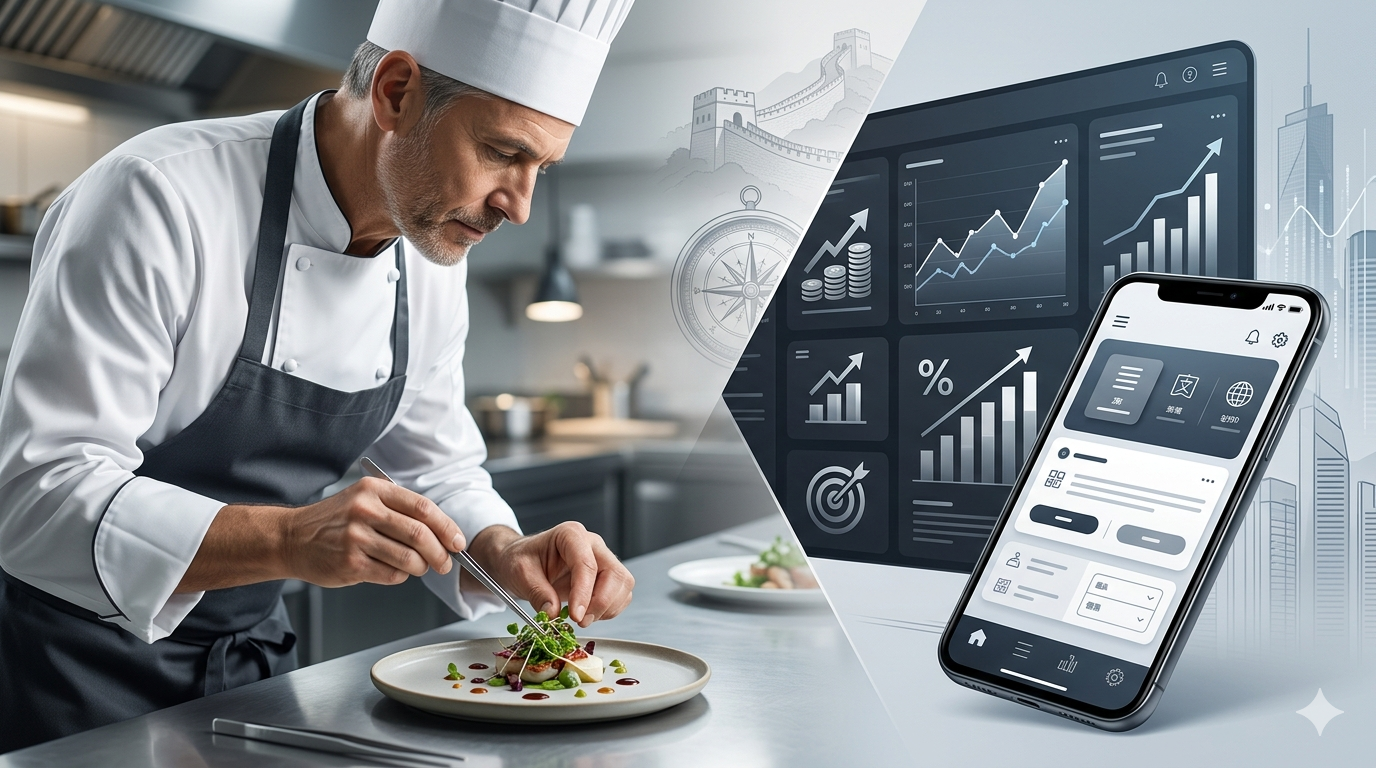
Have you heard of the "death rate" in Japan's restaurant industry? In Tokyo or Osaka, 30% of new restaurants close within one year, 70% within three years, and less than 10% survive beyond ten years.
When top chefs from 5-star hotels go independent, their first instinct is often: "I want to open my own fine-dining restaurant." But they fall into a deadly trap: shrinking the hotel's heavy-asset model into a small shop. Complex processes cause labor costs to explode; buying premium ingredients without hotel-level pricing power makes food costs uncontrollable. Tens of millions in initial investment and sky-high rent crush the chef.
Sun Tzu said: "War is a matter of vital importance to the state; it is the realm of life and death, the path to survival or ruin. It must be studied deeply." Restaurant entrepreneurship is also a battle of life and death. Today we break out of the "chef = brick-and-mortar restaurant" dead end and use Sun Tzu's thinking to calculate a zero-asset-risk, high-margin disruptive direction.
Strategic Thinking: What Is a Chef's Core Asset?
A chef's moat is not a 25-seat kitchen. It is your personal craft, your reputation as a master chef, and your mastery of premium ingredients.
Competing for prime street-front rent is fighting with your weakness against the capital strength of giants. The true Sun Tzu approach: "Avoid the strong, strike the weak." Skip the tables, the waiters, the deposits. Go directly to high-end private chef services and curated dining in shared spaces.
Tactical Calculation: Why This Model "Cannot Lose Money"
Sun Tzu said: "Calculate everything before battle." Let's compare opening a physical restaurant vs. private chef services.
| Dimension | Traditional Restaurant | Private Chef / Shared Space |
|---|---|---|
| Initial Capital | 5-7M JPY (deposit, renovation, equipment) | Near zero (knife set + uniform) |
| Preparation | 3-6 months | 3-7 days |
| Food Waste | 10-15% | 0% (fully reservation-based) |
| Break-even | 3M JPY/month needed | Profit per job, zero fixed costs |
Profit Formula Breakdown
Assume a high-end Ginza shared kitchen, 8-person business banquet, 20,000 JPY per person = 160,000 JPY total:
- Venue rental (hourly): approx. 20,000 JPY
- Premium ingredients: approx. 45,000 JPY
- Chef's net profit: 160,000 - 20,000 - 45,000 = 95,000 JPY!
No rent, no staff costs, no food waste. If no booking, operating cost is zero. This is Sun Tzu's highest principle: "Invincibility depends on oneself."
Practical Execution: Does Japan Support This Model?
Japan's major cities have extremely mature infrastructure for this. They're called "Rental Kitchens." You don't need your own restaurant at all.
- Social banquet type: Alleyway Gourmet Lab in Bunkyo, Patia in Shin-Ochanomizu. Pro-grade equipment with elegant dining spaces.
- Private luxury kitchen: Rinosupe kitchen in Ginza 1-chome, Rinosupe kitchen in Nishi-Shinjuku.
Legal bonus: These rental kitchens already hold restaurant business licenses. You operate fully compliant with Japanese law from day one.
Attack the Heart: How to Acquire Clients?
Private chef is a high-ticket service. The key is earning trust from high-net-worth individuals.
1. Platform leverage: Japan's private chef market is mature. Join Ze-Ryourinin, OurChef, Sharedine immediately. Profile: "Former 5-star hotel executive chef" with professional photos.
2. Community penetration: Tokyo's Minato, Chuo, and Toyosu luxury towers house wealthy executives. Use Instagram to showcase knife skills, targeting "year-end business banquets in your tower apartment."
3. Cross-industry alliances: Partner with luxury real estate agencies. Offer private chef services as gifts for mansion purchase celebrations to access VIP client networks.
Conclusion
Sun Tzu said: "The victorious army first wins and then seeks battle; the defeated army first battles and then seeks victory." True victory is calculated before the fight begins.
Hotel-trained craftsmanship is itself an immense intangible asset in Japan's "craftsman culture." Don't pour your savings into expensive fit-outs and rent. Use the combination of chef skill + premium shared kitchen + reservation-based high pricing to build a business that cannot be crushed.
Consult Kaisei for business strategy, market analysis, and business planning
Our experts support hospitality, investment, and Japan market entry.
Free Consultation